

Blogs
📋 Table of Contents
The Impact of AI on Teachers and the Education System
04 Apr, 2026
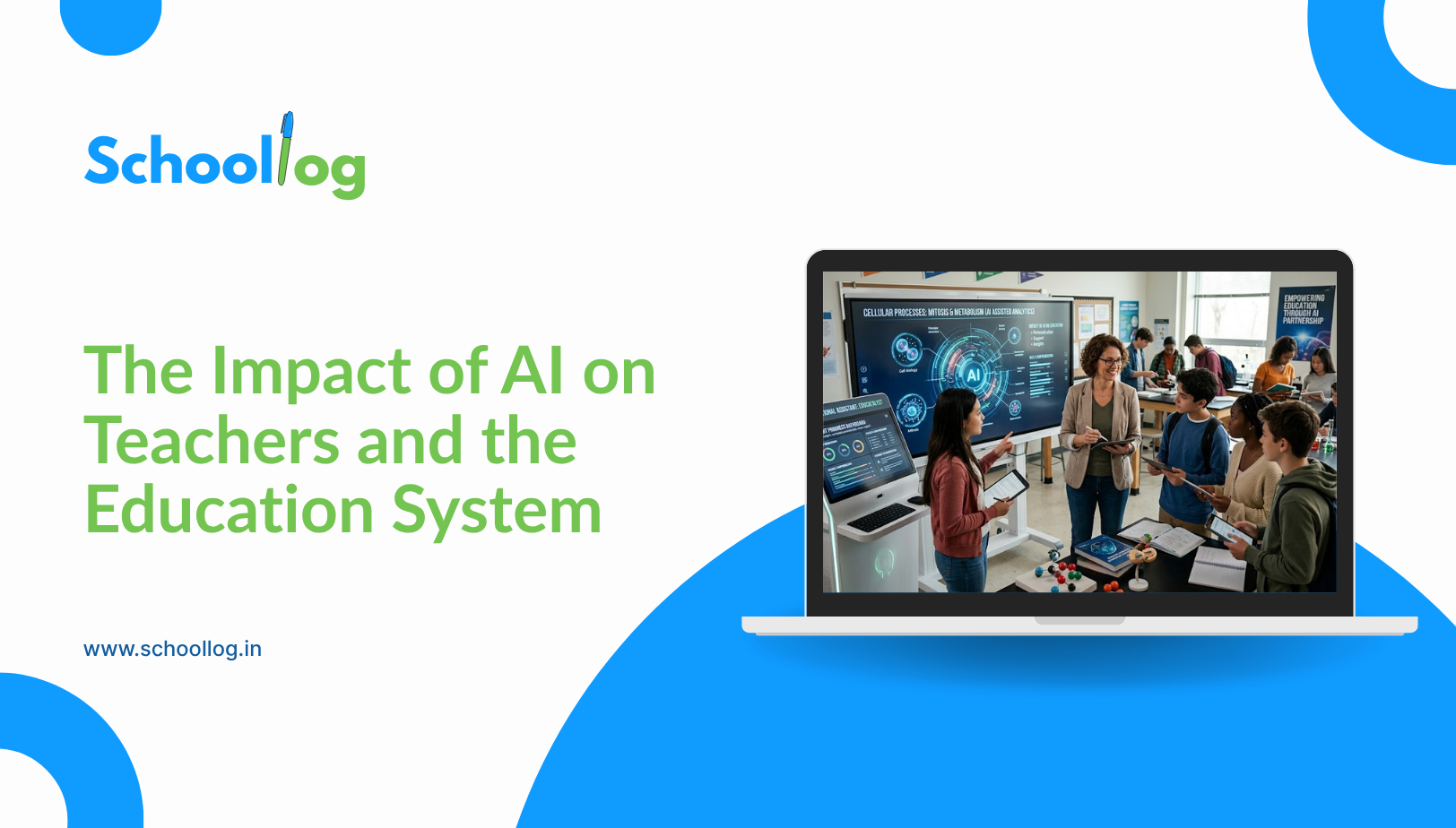
The world experiences an AI industrial transformation, which also affects the educational system. The educational system uses these technologies to create smart classrooms and personalized learning solutions, and artificial intelligence for better teaching and learning processes.
The new reality requires people, institutions, and educational staff members to respond, while it creates new opportunities for them to pursue. The teacher is experiencing a transformation that brings about changes in teaching methods. Teachers use AI technology to transform their work because AI technology does not replace their role. The use of AI technology by teachers allows them to develop educational content that creates interactive learning experiences for their students.
What is AI in education?
With intelligent technology, such as AI, it is possible to simulate human and logical thinking, such as learning and problem-solving, among us. The system consumes data, detects patterns, and makes decisions with little human involvement. In education, AI- based learning systems are used in intelligent tutoring systems, automated grading systems, virtual tutors, and chatbots.
And with AI, they will be able to concentrate on the design of the educational process and results, and offer a more personalized journey to students.
Transforming Teachers' Roles in the Classroom
-
Information providers to learning facilitators:
Teachers used to be the main source of knowledge in the classroom. The spread of AI teaching tools that deliver immediate solutions and professional guidance has transformed the role of teachers into educational guides who provide coaching support.
Through their teaching activities, educators help students to achieve a complete understanding of subjects while developing their intellectual skills and learning to use their current knowledge. The new teaching methods enable teachers to dedicate increased time to student assistance because they require less time for basic skills instruction.
-
Decreased Administrative Workload:
AI technology brought the biggest improvements to office work, which employees considered their most difficult task. AI systems handle attendance monitoring, assignment assessment, schedule creation, and report writing tasks.
The decrease in teacher responsibilities will provide teachers with additional time, which they will use to create lesson plans and build student relationships. Educational institutions use AI capabilities from School ERP and similar systems to operate their educational processes while enhancing their overall operational results.
-
Personalized Teaching Assistant:
With the help of AI- powered learning, teachers have an enhanced grasp of what is expected from their students. With this data, learning gaps can be identified, students’ progress monitored, and instruction adjusted by the teacher.
Instead of using a uniform approach, the teachers can give individual attention to students, and each student is accounted for. This equates to a happier, more empathetic, more accommodating class room.
-
Continuous Professional Development:
Artificial intelligence in education also assists teacher development. Based on their evaluation results, teachers receive personalized training programs as well as tailored teaching methods and educational materials, this is what they need.
Continuous education programs allow teachers to acquire teaching methods and educational materials that are effective, thereby resulting in better student learning.
Effects on the Education System and Learning Opportunities
-
Customized Learning Experiences
Personalized learning is a great strength of AI in education. Platforms based on AI track and analyze students' activities(behavior, performance, learning speed) to provide them with customized learning solutions.
Learning is self-paced, and students can review difficult concepts and take specialized help. This liberty to go through the lessons as they want enables them to understand more and take the stress away from learning in a regular classroom set-up.
-
Enhanced Student Engagement:
As AI generated educational content becomes more common across digital learning platforms, reviewing its readability is equally important. An AI Humanizer can help refine AI generated text to make it sound more natural and easier for students to understand.
-
Data- Informed Policy And Decision Making:
AI allows us to turn the data into profitable business intelligence. School officials could also use the information to help guide curriculum, track student progress and allocate resources.This data-oriented approach creates boosted efficiency to the quality of the educational system. Similar AI applications can also support organizations beyond education by automating workflows, analysing data, and improving operational decision-making through AI Business Solutions.
-
More Accessibility and Inclusion:
AI has allowed education to be reachable for all types of students through its impersonal yet inclusive educational method. Students who have disabilities and students who need help with language comprehension will find major benefits from speech-to-text and text-to-speech and language translation tools like Day Translations' free AI translation tool.
The tools help students to participate in class activities with greater success. A user-supported educational system is required to cater to learners by addressing individual responsibilities when arranging the educational services.
-
Smart School Management:
The AI-based school management software allows schools to handle their application process, parent communication, fee collection, and attendance tracking work at high efficiency. Schoollog and other applications serve to digitize everyday school operations while creating transparency and eliminating mistakes. This allows more teacher–student–parent interaction.
Challenges of AI in Education
-
Absence of Human Element:
Educational results show improvement through AI technologies, which create better learning experiences for students. The educators use empathy together with their teaching methods to create essential elements that help students achieve their academic targets.
The students who require AI tools to meet their needs will experience social interaction limits, which will obstruct their emotional development and social skills learning process.
-
Data Privacy Issues:
AI systems need extensive data collection for their operational requirements, which creates security threats and privacy infringement problems. The school system must protect those data records because they contain private student information.
The organizations that develop effective cybersecurity systems can establish customer trust relationships while their systems fulfill all necessary regulatory requirements.
-
Digital Divide:
Students and educational institutions possess distinct degrees of access to technological resources. The execution of artificial intelligence needs three essential elements, which consist of fundamental infrastructure and internet access, together with the necessary digital literacy competencies.
If educational institutions do not take steps to address this gap, it will create greater educational inequality between students from rural areas and those from disadvantaged neighborhoods.
-
Resistance to Change:
Educational institutions need to adopt new thinking methods for implementing AI technology in their classrooms. Some teachers do not want to use new technology because they lack proper training and they fear for their employment security.The delivery of training and support is essential for a successful change.
Conclusion:
AI in education transforms education through three main effects, which include creating personalized learning experiences, simplifying educational processes, and providing students with better access to learning resources, while it helps decrease the workload that teachers need to handle for administrative tasks.
With advancing AI in the classroom, predictive insights, metaverse learning experiences, and intelligent school management systems will become realizable.
The teacher maintains vital importance for student guidance because he or she gives students empathy and mentorship help, which technology cannot duplicate. The educational platform Schoollog ERP serves as a guiding tool that enables schools to achieve a more advanced and adaptive educational system, which benefits both teachers and students in their performance.
✍️ Muskan Singh
Hi, I'm Muskan Singh, a content writer passionate about exploring how technology, EdTech, and SaaS are shaping the...
Show More📞 Get In Touch
Have questions? We'd love to hear from you!
✍️ Muskan Singh
Hi, I'm Muskan Singh, a content writer passionate about exploring how technology, EdTech, and SaaS are shaping the...
Show More📞 Get In Touch
Have questions? We'd love to hear from you!
Related Blogs

10 Productivity Tips for School Admins Using Schoollog
Learn 10 proven productivity tips for school administrators and how Schoollog school management software helps automate tasks and save time.
How to Increase School Productivity with Automation
A school automation system simplifies admissions, attendance, fees, HR, and communication, helping schools improve productivity, accuracy, and teaching efficiency.
10 ChatGPT Prompts for School Administrators
Explore the top 10 ChatGPT prompts every school administrator needs to improve parent communication, create policies, plan events, and streamline school management using AI.